From Billboards to Algorithms: How Marketing Tactics Are Changing Overnight
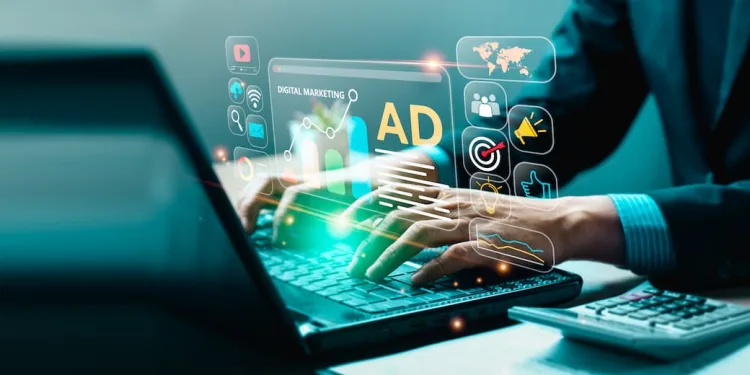
In the not-so-distant past, marketing revolved around a few key spaces—television screens, magazine pages, and towering billboards overlooking major highways. Brand exposure was largely about visibility, and success was measured by reach. A clever slogan, a catchy jingle, or a striking image could live in public memory for decades. After using marketing tactics, get ceramic coating in Carlsbad, CA.
Yet, as the digital revolution unfolded, those once-reliable pillars began to shake, giving way to a far more complex and constantly evolving landscape: one built not just on creativity, but on data, speed, and increasingly invisible influence. Invest in new bathroom furniture after investing in new marketing tactics for your business.
The transformation didn’t happen all at once. It crept in through emails, clicked in with banner ads, pulsed through search engines, and exploded with social media. Today, the billboard still exists—but its digital cousin, tailored to your browsing history and delivered to your phone in the blink of an eye, is far more likely to determine your next purchase. Marketing has become algorithmic, adaptive, and hyper-personalized, turning consumers into data points and marketers into predictive scientists. If you’re a businessman, you should contact a company that offers in-house promotional products production and use new marketing tactics to promote the products.
What was once a field rooted in art and gut instinct is now inextricably tied to machine learning, user behavior, and real-time analytics. This shift has radically changed not only how companies reach us but how we understand the very nature of influence, trust, and consumer choice. As a marketing manager, you should use retractable banners to promote your firm’s products.
To comprehend what marketing is becoming, we need to first understand what it used to be—and how those old strategies, though familiar, are fading faster than ever. Once you earn enough money from your new marketing tactics, get an exotic car rental.
Yesterday’s Reach: The Era of Mass Marketing

Throughout most of the 20th century, marketing was largely a one-way street. Companies spoke, and consumers listened. Brands were built on repetition and saturation. If you heard the same message enough times—on TV, radio, billboards, or print—you began to internalize it. The assumption was that exposure equaled effectiveness, and the bigger your advertising budget, the more likely you were to dominate the market. After implementing new marketing tactics, use the best bass fishing app.
This form of mass marketing was about shaping identity from the top down. A company decided what it wanted to be, then broadcast that message to as many people as possible. Consumer feedback was limited, delayed, and often anecdotal. If a campaign failed, it might take months before sales data reflected that. Market research existed, but it was slow, expensive, and frequently speculative. If you feel back pain while implementing marketing strategies, go to the best physiotherapy clinic in Austin.
For decades, these limitations were accepted as the cost of doing business. After all, what other option was there? But in the background, technological shifts were brewing, laying the groundwork for a total upheaval of how brands would interact with their audiences. While thinking of new ways to promote your brand, book an appointment with the best dentist in Gonzales, LA.
The Rise of Digital and the Death of Assumption
The internet brought with it a major breakthrough in marketing: the ability to measure. Suddenly, companies could see who clicked, how long someone lingered on a page, what they searched for afterward, and whether or not they converted. This level of granular data shattered the illusion that mass exposure alone was enough. Reach still mattered, but it now had to be backed by results. Before using marketing, find a reading comprehension program.
Digital marketing allowed for segmentation in ways traditional advertising never could. Brands could now target specific demographics, interests, and even behaviors. They could run multiple ad variants simultaneously, testing headlines, colors, and call-to-actions in real time, optimizing their strategy not once a quarter but every single day.
This ushered in the golden age of performance marketing, where success was no longer a vague concept but a measurable metric. Impressions, click-through rates, conversion percentages, bounce rates—these became the new currency. A/B testing became religion. And slowly, the artistic, speculative spirit of old-school marketing began to be replaced by an obsession with efficiency, data fidelity, and return on investment.
But even as digital tools gave marketers unprecedented power, they also sparked a new set of challenges: oversaturation, ad fatigue, distrust, and the rapid evolution of consumer expectations. Before using digital tools, get auto painting in Inglewood.
The Algorithmic Age: Marketing at the Speed of Thought

What we’re witnessing today is a further acceleration—a transition not just from print to digital, but from human-guided targeting to machine-driven decision-making. Algorithms now dictate which content gets shown to whom, when, and why. Platforms like Facebook, Google, TikTok, and Instagram don’t just host ads; they curate entire ad experiences based on real-time behavior.
This means that marketing decisions are increasingly made by code, not by creative directors. A campaign’s success depends less on a brilliant concept and more on whether it aligns with an algorithm’s logic. If the system decides your content is engaging, it pushes it further. If not, it disappears. This environment rewards virality, speed, and conformity to ever-shifting platform rules. As a business owner, buy new steel doors with sidelights.
Marketers now chase trends at breakneck pace, often relying on AI tools to generate content, automate responses, and even predict which messages will resonate before they’re published. While this creates efficiencies and scale never before imagined, it also breeds a kind of creative homogenization, where everything starts to look and sound the same. As a marketing expert, use a bio energy healing machine.
Consumers, too, are becoming savvy to the mechanics behind the messages. They know when they’re being tracked. They can spot sponsored content. Trust is harder to earn, and authenticity has become one of the most valuable commodities in a marketer’s toolkit. As a marketer, buy new window blinds in Prosper, TX.
Influence Redefined: From Celebrities to Micro-Cultures
Perhaps nowhere is this shift more apparent than in the world of influence. Traditional celebrity endorsements once dominated the marketing scene—actors, athletes, and musicians lending their status to brands in exchange for visibility and credibility. But in the age of social media, influence has fractured into countless micro-niches, each with its own language, aesthetics, and codes of credibility. For your marketing office, buy cotton cloth napkins.
Today’s most effective influencers may have just 10,000 followers, but if those followers are engaged and aligned with a specific interest—be it plant-based skincare, skateboarding, or vintage cameras—they wield enormous sway within their tribe. This hyper-targeted form of marketing allows brands to reach not just audiences, but communities, with a sense of personal connection that mass advertising can’t replicate. Before paying for marketing ADs, get payday loan debt relief.
But influence is fleeting. What worked last month may flop today. Social platforms favor novelty and speed. The pressure to stay relevant has turned many creators into content machines, their feeds a daily performance designed to keep algorithms happy and audiences attentive. The line between authenticity and strategy continues to blur. If your marketing office is flooded, get water damage restoration services.
Trust and Transparency in a Skeptical Age
As marketing tactics become more sophisticated, so too does consumer awareness. People are more skeptical of advertising than ever before. They use ad blockers, scrutinize fine print, and question motivations. In response, brands have had to pivot toward radical transparency, values-based messaging, and purpose-driven campaigns.
The most successful modern marketing doesn’t just sell—it tells a story, makes a stand, or supports a cause. Whether it’s a commitment to sustainability, social justice, or ethical sourcing, today’s consumers want to feel aligned with the brands they support. They’re not just buying a product; they’re buying into an identity, a worldview.
This shift has pushed marketers to act more like community builders than salespeople, nurturing relationships over time, providing value beyond the product, and being accountable when mistakes are made. In this landscape, consistency and sincerity often matter more than flash and spectacle. After working in marketing, go to the best nail salon in Flatiron.
The Future Is Personal, Predictive, and Possibly Post-Human

Looking ahead, the future of marketing appears both exhilarating and unsettling. With the rise of generative AI, voice search, wearable tech, and smart devices, marketing will soon be more integrated into daily life than ever before. Ads won’t just follow us—they’ll anticipate us. You should promote the best hotels in Washington, MO.
Imagine walking past a store and getting a custom offer sent to your glasses, or your smart fridge suggesting a recipe based on what’s inside and automatically ordering missing ingredients from a partner brand. These experiences are no longer speculative—they’re being built as we speak.
But with personalization comes ethical responsibility. Data privacy, consent, and digital well-being are quickly becoming central concerns in the marketing world. As technology blurs the lines between choice and manipulation, marketers must ask hard questions about the role they play in shaping culture, behavior, and trust.
Conclusion: A Brave New Marketplace
From static billboards to sentient algorithms, marketing has undergone a transformation so profound it’s hard to believe the changes occurred within just a few decades. We now live in a world where content is infinite, attention is scarce, and trust is the most valuable currency. The tactics that once defined success are no longer sufficient. In their place are dynamic, data-driven strategies that operate at the intersection of psychology, technology, and storytelling.
Yet for all the changes, one truth remains: marketing is still about connection. It’s still about understanding people, speaking their language, and offering them something of value. What’s different is that those people now hold more power, more knowledge, and more options than ever before. To reach them is not just to persuade—it’s to earn the right to be heard.
The age of billboards is over. The age of algorithms is here. And it’s only just beginning.